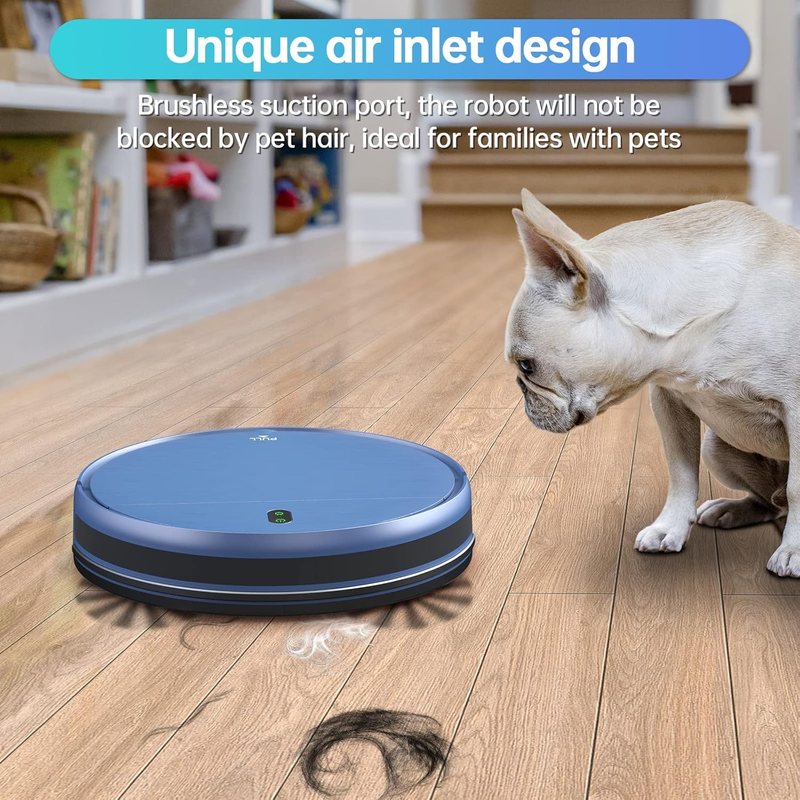
In a home with a shedding animal, the part that decides whether a robot vacuum
survives its first year is the brush, not the suction. Bristle rollers collect hair into a rope
around the axle within days. A brushless suction port or a rubber tangle-free roller removes that
maintenance entirely, which matters more day to day than any figure in pascals.
The roller brush is the problem
A conventional robot vacuum has a bristle roller spinning at the intake to agitate carpet. In a
carpeted home without animals it earns its place. In a home with a long-haired cat or a shedding
dog it becomes a job: hair winds around the axle, compacts into a hard sleeve, loads the motor and
eventually stops the roller turning. Freeing it means removing the end cap, cutting the hair off
with scissors and clearing the bearings. Every one to two weeks.
Manufacturers have responded in two ways. Some fit a rubber roller with a spiral fin instead of
bristles, which sheds hair rather than gripping it. Others remove the roller altogether and rely on
airflow through a wide intake — the approach the ZCWA BR151 takes. Both work. Neither is a
marketing claim; it is the difference between a robot that gets used and one that ends up in a
cupboard.
A brushless suction port: hair passes into the bin instead of winding round an axle.
What actually matters, in order
Brush type. Brushless or rubber tangle-free. This is the whole decision in a hard-floor pet home.
Dustbin volume. Hair is bulky rather than heavy, so it fills a bin by volume long before weight. A 0.2 L bin means emptying after every run; 0.5 L buys two or three.
Filter, and whether it is washable. Dander clogs filters faster than dust does. Washable filters plus spares in the box beats a proprietary cartridge that has to be ordered.
Side brushes. Hair collects along skirting boards and under furniture edges. Two side brushes pull it into the intake path; one does half the job.
Body height. Pet hair accumulates under sofas and beds because nothing ever cleans there. A robot that cannot get under them cannot solve that.
Suction. Last, on hard floors. It becomes first on carpet.
Suction figures, in context
Pascal ratings are the most quoted and least useful number in the category. Hair on a hard floor
is easy to move; 1400 Pa handles it. Hair worked into carpet pile is a different problem, and no
amount of suction substitutes for mechanical agitation — which is exactly the roller brush a pet
home is trying to avoid. That tension is real and unresolved: a robot optimised for pet hair on hard
floors is not the robot for pet hair in deep carpet, and vice versa.
What suction is needed where
Surface
Workable suction
Notes
Tile, laminate, sealed wood
1200–2000 Pa
Airflow does the work; brush type matters more
Low-pile rug or carpet
2000–3000 Pa
Expect a second pass for embedded hair
Medium to high pile
4000 Pa and up
Needs an agitating roller as well as suction
The routine a pet home actually needs
Every run: empty the bin. This is not optional and it is the step people skip.
Weekly: unclip the side brushes and cut away wound hair; rinse or tap out the filter and let it dry completely.
Fortnightly: clear hair from the wheel axles and the front castor, which collect it invisibly and start dragging.
Monthly: wipe the cliff sensors — dander films them over and causes odd turns and hesitation.
Every two to three months: replace the filter rather than washing it again.
It matches the profile above on the points that matter most: no roller brush, two side brushes,
washable filter with four spares included, and a 2.87 in body that reaches under the furniture where
hair collects. It falls short on bin volume — 0.2 L is small, and in a home with a large shedding
dog it will need emptying after every run without exception.
The mopping function is a genuine bonus in a pet home for a reason that is rarely mentioned:
paw prints and dried water-bowl splashes are the mess that vacuuming leaves behind. Bin volume,
filter count and the rest of the numbers are on the
specification page.
Model BR151 · ASIN B0B81SWDL1
ZCWA Robot Vacuum and Mop Combo (Blue)
1400 Pa suction with a brushless intake, so long hair passes straight into the 0.2 L dustbin instead of winding round a roller
230 ml electronic water tank with two flow levels for laminate, tile, granite and sealed parquet
2500 mAh battery, roughly 100 minutes of cleaning and up to 1290 sq ft per charge, then it finds the dock on its own
2.87 in tall — clears the gap under most sofas, beds and kitchen kickboards
What is the best type of robot vacuum for pet hair?
One that does not have a bristle roller brush. Either a brushless suction port or a rubber tangle-free roller keeps hair from winding into a solid rope around the axle, which is the failure mode that makes people stop using a robot vacuum in a home with animals.
How much suction is needed for pet hair?
Less than the marketing suggests, on hard floors. Hair is light; 1400–2000 Pa lifts it from tile, laminate and sealed wood without difficulty. Suction only becomes the limiting factor on carpet, where hair works itself down into the pile and needs 4000 Pa or more plus an agitating brush to come out.
How often does a robot vacuum need emptying in a home with a dog?
After every run, in practice. Robot dustbins in this class hold 0.2 to 0.6 litres, and a shedding dog fills the smaller end of that in one pass across a flat. A full bin does not stop the robot; it just quietly stops picking anything up.
Do robot vacuums help with pet allergies?
They help with the dander that settles on the floor, and they help most by running every day rather than weekly. They do not filter the air. A robot with a washable filter, emptied outdoors or into a lined bin, is a reasonable part of an allergy routine but not a substitute for an air purifier.
Is the ZCWA BR151 suitable for pet hair?
It is one of the things it is built around. The intake is brushless, so there is no roller for hair to wrap, and the two side brushes sweep hair inward from skirting boards. The constraint is the 0.2 L dustbin, which needs emptying after most runs in a home with a shedding animal. Details are on the specification page.