Robot Mopping on Hard Floors: What It Can and Cannot Do
ZCWA Product TeamReviewed 2026-07-287 min read
A robot mop wipes a floor; it does not scrub one. It applies almost no downward
pressure, carries between 200 and 300 ml of water, and passes over each spot once. Used daily on a
floor that is already reasonably clean, it works very well. Used to rescue a floor that has been
neglected for a month, it disappoints — and that mismatch of expectation is behind most negative
reviews of robot mops.
Wipe versus scrub
Hand mopping works through pressure and repetition: leaning on the mop, going over the same spot
several times, and changing the angle. A robot does none of these. It drags a damp cloth across the
floor at a constant, low pressure, once. That is genuinely useful — it lifts the film of dust and
footprints that settles on hard floors every day — and it is genuinely limited.
The practical consequence is a change in routine rather than an elimination of one. The robot
runs daily and the floor never gets dirty enough to need scrubbing. A proper hand clean happens
monthly instead of weekly. Anyone expecting the robot to remove the monthly clean entirely will be
unhappy with any model at any price.
Two ways robots hold water
Gravity-fed pad
The cheapest arrangement: a tank sits above a cloth and water seeps through continuously.
Nothing controls the rate. The pad is saturated at the start of a run and nearly dry at the end, so
the first room gets too much water and the last room gets too little. On sealed wood and laminate,
too much water is not a cosmetic problem — it works into the joints.
Electronically metered tank
A pump or valve releases measured water at a rate the user selects. Coverage is even from the
first square metre to the last, and the low setting puts down little enough for sealed wood. The
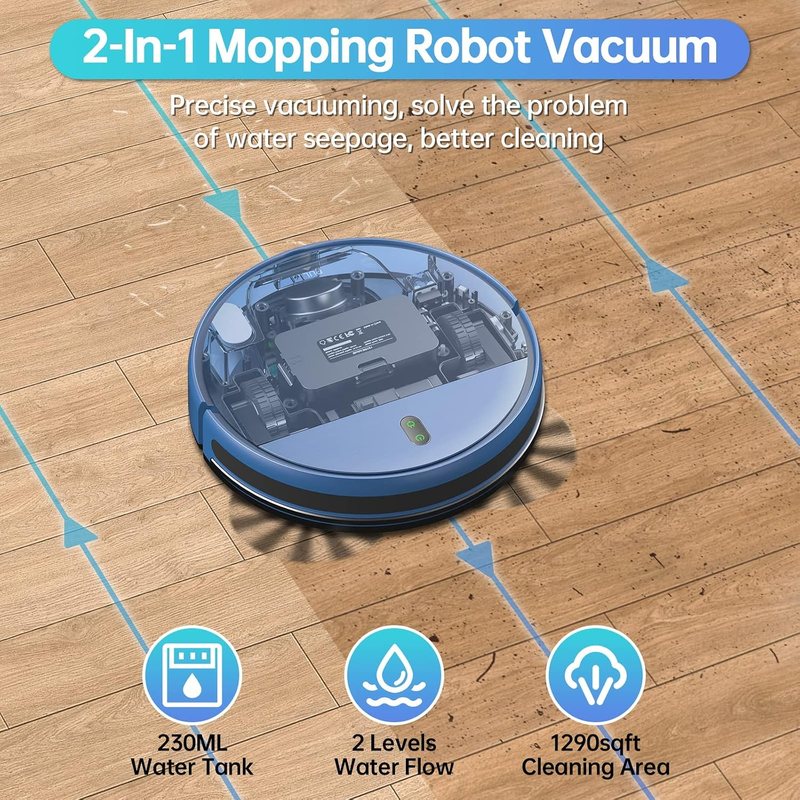
ZCWA BR151 uses this type: a 230 ml tank with two flow levels.
The trade-off is a nozzle, and nozzles block. Hard water leaves limescale; detergent leaves
residue. This is the single most reported fault on metered robot mops, and it is almost entirely
preventable — clean water only, and a vinegar soak every month or two.
A metered tank puts down the same amount of water in the last room as in the first.
Which floors, and which not
Floor suitability for robot mopping
Floor
Suitable
Notes
Ceramic and porcelain tile
Yes
The ideal surface; use the higher flow level
Vinyl and LVT
Yes
Tolerant of water, no special care
Sealed hardwood
Yes, low flow
Only with a metered tank; keep the cloth damp, never wet
Laminate
Yes, low flow
Check the joints are intact first; water in a lifted joint swells the core
Granite and sealed stone
Yes
Fine with clean water
Unsealed hardwood
No
Absorbs water directly
Untreated stone, cork
No
Porous; stains and swells
Carpet and rugs
No
Remove the tank and cloth first — this model cannot detect carpet
Getting a better result
Vacuum before mopping, or use a combo that does both. Dragging a damp cloth over grit makes streaks and scratches.
Dampen the cloth before fitting it. A dry cloth starting a run polishes dust around instead of lifting it.
Clean water only. No detergent, no vinegar in the tank, no floor cleaner.
Rinse the cloth after every run and hang it to dry. A cloth left damp on the robot goes sour within a day.
Match flow to floor. Low for wood and laminate, high for tile. Streaks usually mean the flow is too high, not too low.
Refill for large floors. 230 ml does not cover 1290 sq ft; it covers a good deal less, and the last rooms get nothing.
Descale the nozzle every one to two months in a hard water area.
Realistic expectations
Tank capacity, flow levels and coverage for this particular robot are listed on the
BR151 specification page. A robot mop run daily on a hard floor removes dust
film, light footprints, paw prints and fresh splashes. It does not remove dried food, sticky spills, grout staining or shoe scuffs. It is a
maintenance tool. Bought as one, it is among the more satisfying appliances in a house; bought as a
replacement for cleaning, it is a disappointment waiting to be written up as a bad review.
Model BR151 · ASIN B0B81SWDL1
ZCWA Robot Vacuum and Mop Combo (Blue)
1400 Pa suction with a brushless intake, so long hair passes straight into the 0.2 L dustbin instead of winding round a roller
230 ml electronic water tank with two flow levels for laminate, tile, granite and sealed parquet
2500 mAh battery, roughly 100 minutes of cleaning and up to 1290 sq ft per charge, then it finds the dock on its own
2.87 in tall — clears the gap under most sofas, beds and kitchen kickboards
For maintenance, largely yes; for recovery, no. A robot mop run daily keeps a hard floor from ever reaching the state that needs scrubbing. It will not lift a dried spill, and it applies almost no downward pressure, so anything stuck to the floor stays stuck.
What is the difference between a gravity pad and an electronic water tank?
A gravity tank lets water seep into the pad continuously, so the pad is wettest at the start and the floor gets more water than it needs. An electronically controlled tank meters water in measured amounts at a selectable rate, which is what makes sealed wood and laminate safe to mop. The ZCWA BR151 uses the metered type, 230 ml with two flow levels.
Which floors should not be mopped by a robot?
Unsealed hardwood, untreated stone, cork, and any laminate with damaged or lifting joints. Carpet obviously — remove the tank and cloth before the robot crosses a rug, since this model cannot detect carpet and lift the pad.
Can floor cleaner be added to the water tank?
No. Detergents foam and leave residue that dries inside the electronic nozzle, and that is the most common way to disable the mopping function permanently. Clean water only. Clean the floor with detergent by hand occasionally and let the robot handle maintenance in between.
Why has the robot stopped releasing water?
Three causes, in order of likelihood: the tank is empty, the nozzle has scaled up from hard water, or a detergent residue has blocked it. Soaking the nozzle in warm water or white vinegar clears the first two. The support page covers what to do if it does not.